About Us
.png/:/cr=t:0%25,l:0%25,w:100%25,h:100%25/rs=w:1209,cg:true)
Join the jubilee!
History of Juneteenth
How Juneteenth Started
Juneteenth (June 19, 1865) marks the day Union soldiers
brought news of freedom to Galveston, Texas, enforcing the
Emancipation Proclamation over two years after its signing.
It signifies the end of chattel slavery in the last Confederate
stronghold and serves as a, perhaps more accurate, second
Independence Day.
The Key Truths and Misconceptions About Juneteenth:
It Was Not Instant Freedom: Despite the order, many enslaved
people in Texas did not gain freedom immediately.
Slave owners often withheld the information until after the
harvest, and some formerly enslaved people faced violence or
were forced to continue laboring after the announcement.
The Emancipation ( being set free) Proclamation Was Not
the Legal End: The 1863 Proclamation only applied to
rebelling states and was only enforceable when Union troops
were present. Slavery continued in border states (like Maryland
and Kentucky) until the 13th Amendment was ratified in
December 1865.
A History of Resistance: Juneteenth was not merely a gift of
freedom but a commemoration of a long, often brutal struggle
for independence.
Delayed News and Enforcement: While the Civil War
essentially ended in April 1865, Texas remained defiant. Major
General Gordon Granger’s arrival with 1,800 troops was
necessary to enforce authority in the state.
A Long-Overlooked Holiday: While celebrated by Black Texans
since 1866, it became a Texas state holiday in 1980 and only
a federal holiday in 2021.
Juneteenth serves as a reminder of the "unfinished" fight for
equality in America, highlighting that freedom was frequently
delayed or denied, notes the National Civil Rights Museum.
KEY REASONS TO REMEMBER JUNETEENTH
A True Day of Emancipation: It marks the moment in 1865
when Gen. Gordon Granger arrived in Galveston, Texas, to
announce that the roughly 250,000 enslaved people in the state
were free.
Acknowledgment of Delayed Justice: The news arrived over
two years after President Lincoln’s Emancipation Proclamation
(Jan 1, 1863), highlighting the slow, often violent resistance to
ending slavery.
Honoring Resilience and Freedom: It is a day to celebrate the
survival, resilience, and contributions of African Americans,
putting them at the center of the American story of freedom.
Commemoration and Reflection: Juneteenth serves as a day
for reflection, education, and community gathering to address
the lasting legacy of slavery and to celebrate Black culture.
A Promise of Future Progress: It is a reminder of the need to
continue working toward true equity and justice for all citizens,
highlighting that independence was not fully realized for
everyone on July 4, 1776.
The day serves as a powerful reminder of what the nation has
overcome and the work that still remains to be done,
transforming a moment of historical significance into a lasting,
celebrated legacy of hope.
THE ROLE OF THE CHURCH
The African American church serves as the foundational
backbone of the Black community, acting as a center for social
cohesion, community support, spiritual guidance, and political
activism.
By providing a safe space for worship, fellowship, and
organizing, it strengthens bonds and fosters unity through shared
experiences and collective action.
Core Roles in Bringing People Together
Safe Harbor & Social Support: Historically and presently, the
church offers a refuge from racial discrimination and a
community center for support services, including elder care,
childcare, and aiding new urban migrants.
Social Cohesion & Community Building: It fosters a strong
sense of kinship that extends beyond blood ties, creating a
family environment built on shared faith and resilience.
Platform for Empowerment & Action: The church acts as a
focal point for social justice, organizing voter registration
drives, hosting town halls, and providing a platform for
addressing issues like income inequality and education.
Center for Cultural Retention: The Black church preserves
and transforms traditions through music, worship styles (like
call and response), and fellowship, acting as a repository for
African American culture and identity.
Political Activism: It serves as a, "headquarters for activism,"
providing both space and leadership for civil rights initiatives,
such as the, "Southern Christian Leadership Conference,"
(SCLC) founded by Dr. Martin Luther King Jr..
Historical Significance
From the creation of independent congregations after the Civil
War to serving as safe meeting places during the Civil Rights
Movement and the Underground Railroad, the church has
empowered African Americans to build community resilience in
the face of adversity.
THE LONG-TERM FUNCTION OF THE CHURCH FOR
ALL PEOPLE
The church acts as the body of Christ, bringing people together
by fostering a unified community centered on worship, shared
faith, and mutual love, transcending societal divisions. It serves
as a spiritual family that provides encouragement, fellowship,
and a shared mission to serve God and others, creating a
cohesive, diverse community in Christ.

Photograph by Grace Murray Stephenson of celebrations in Eastwoods Park, Austin, 1900. — Source
BLACK HISTORY MOMENTS
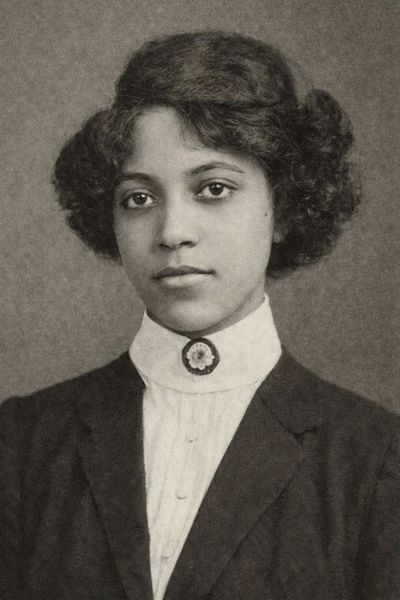
Celebrating Alice Augusta Ball
At 23, she cured leprosy. At 24, she was gone.
And for 90 years, a white man took credit for her work.
This is the story of Alice Augusta Ball — the genius they tried to erase.
She grew up in Seattle in the early 1900s, in a family that believed Black brilliance was worth investing in.
Her grandfather was one of the first Black photographers in America.
Her mother scrubbed floors so she could buy Alice a microscope.
That gift changed the world.
Alice devoured chemistry like it was oxygen.
She earned two bachelor’s degrees.
Published research while still a student.
Then moved to Hawai‘i — and became:
 The first woman to earn a master’s in chemistry at UH
The first Black woman to graduate with that degree
The first woman chemistry professor in the school’s history
But while she was teaching, she saw something far more urgent than academia: Hansen’s disease — leprosy. A diagnosis meant exile. You were ripped from your home and shipped to an island to die alone.
There was a treatment — a bitter, sticky oil that barely worked and caused excruciating pain. Many refused it. Many still died.
Alice refused to give up. In her laboratory, she found the answer no one else could:
She transformed that thick oil into a form the body could actually absorb.
A breakthrough injection that finally saved lives. Patients began recovering.
Families were reunited. People who had been condemned were suddenly healing.
Her discovery became known as the Ball Method. She changed medical history before most people finish college.
And then — she was gone. At just 24, a mysterious lab accident took her life.
She never saw the miracle she created. Then came the theft. The university president — a white chemist named Arthur Dean — took her research, stripped off her name, and renamed it: “The Dean Method.”
For decades…
 His name went in textbooks
His name was praised by doctors
His name received the credit
Her name nearly vanished from history entirely. A theft so quiet, most people never even knew a crime was committed. It took 90 years for the truth to finally surface. Researchers uncovered Alice’s original papers.
Her work. Her brilliance. Her signature breakthroughs. The spotlight shifted. The lie crumbled. And today the world knows: It was The Ball Method — ALWAYS.
Alice Ball cured a disease that had destroyed lives for centuries. She freed families. She saved thousands of people from isolation and death. And she did it all in one year. Imagine what she could’ve done with a lifetime. Alice Ball deserved a Nobel Prize. She deserved statues. She deserved to be the name every science student memorizes. Instead, she was buried under silence…
Until now. We speak her name because history refused to. We honor her because others didn’t. We remember her because she earned it.
Alice Augusta Ball (1892–1916)
The chemist who changed the world before she had time to live in it.
Celebrating Bessie Coleman
Bessie Coleman - Early American civil
aviator.
June 15, 1921
Bessie Coleman, First African American Woman to
Earn a Pilot's License
Bio
Born: January 26, 1892 in Bessie Coleman was born
in Waxahachie, Texas in 1892
Died: April 30, 1926 (aged 34) in Jacksonville,
Florida, cause of death, plane crash.
Life
Bessie Coleman was born in Waxahachie, Texas in 1892.
Her mother was of African ancestry and her father was
of African and Native American ancestry.
Due to discrimination in the United States,
however, she went to France to attend an aviation
school to become a pilot. In 1921, she became the first
American woman to obtain an international pilot’s license.
Coleman was killed in 1926 during an aerial show rehearsal. Her barrier-breaking life,
determination, and impressive career accomplishments continue to provide inspiration for
others to this day.
"Well, because I knew we had no aviators, neither men nor women, and I knew the Race
needed to be represented along this racist important line, so I thought it my duty to risk my
life to learn aviating and to encourage flying among men and women of the Race who are so
far behind the white men in this special line, I made up my mind to try. I tried and was
successful." – Bessie Coleman, Excerpt from "Aviatrix Must Sign Life Away to Learn
Trade," Chicago Defender, October 8, 1921
HER LIFE CRONOLOGICALLY
The Great Migration to Chicago
When Coleman moved to Chicago, she began looking for a job. Most African American
women who worked outside the home were domestic workers, although a few became
schoolteachers. It wasn’t until the first World War that factories would employ Black women.
With limited opportunities, Coleman decided to become a beautician and enrolled in the
Burnham School of Beauty Culture to become a manicurist.
She soon became one of the most popular manicurists in Black Chicago. She sat at a window
table where her mostly male customers could be seen being groomed by “a beautiful
woman.” While in Chicago, she also became an avid reader of the African American-led
Chicago Defender newspaper.
After five years in Chicago, Bessie learned a trade, married, found her own place to live, had
seen her brothers go to war, and survived a race riot. Although Coleman and her family
survived the riot, it left 38 people dead, 537 injured and left over 1,000 people homeless.
Even in the North, Coleman found her life at risk and opportunities limited because of her
race and gender. At the age of 27, after her brother John described women flying airplanes in
France while he was there during the war, she decided the air would be the arena for her
ambitions (Rich 27). She applied to almost every American flying school but was rejected
because of her race and gender. The doors to the open skies of America were closed to
Coleman, but France appeared to be a different story.
Colman sought the advice of Robert S. Abbott, the editor and publisher of the Chicago
Weekly Defender. On his advice, Coleman learned French, took a better paying job and
began applying to French aviation schools.
On to France
On November 9, 1920, Coleman was issued an American passport and went to the French
consulate for a tourist’s visa of one year. Then on November 20th, she sailed for France from
New York City. Upon her arrival, she selected France’s most famous flight school - the Ecole
d’Aviation des Frères Caudron at Le Crotoy in the Somme where she completed a ten-month
course “including tail spins, banking and looping the loop.” (Rich 32).
At this time, airplanes were fragile, and flying was hazardous. During her training, she
witnessed the danger of her new profession when an accident killed a student pilot.
After seven months of training, and two weeks after the
Tulsa Race Riot, she took the qualifying test for a license
from the renowned Federation Aeronautique
Internationale (FAI), the only organization at the time
whose recognition granted one the right to fly anywhere
in the world. She was the first American of any race or
gender to be directly awarded these credentials.
Flying Across the U.S.
Coleman returned to New York in September of 1921 and was greeted by reporters from
several national African American newspapers. She also received a silver loving cup from
the cast of the Broadway hit, Shuffle Along in honor of her achievement. The musical
launched the careers of Josephine Baker and Paul Robeson. The cup was a gesture not only
of respect and admiration, but also of compassion and recognition of the odds she and other
African Americans had to face.
Coleman traveled across the country performing in air shows as a stunt pilot. She gave
speeches and showed films of her air shows in theaters and schools to raise funds for the
cause. Audiences were fascinated by her performances of “loop the loops” and figure 8’s in
the sky. She toured Europe as well as the US, performing shows and giving lessons while
encouraging African Americans to learn aviation. Coleman’s ultimate dream was to own a
plane and create a flight school for African Americans.
Coleman returned to Chicago in 1922 as the triumphant “Queen Bess, Daredevil Aviatrix”.
Her Chicago debut brought over 2,000 spectators of all different backgrounds.
Coleman even signed a contract to star in a full-length feature film. However, she quit and
walked off of the movie set. After realizing the film portrayed African Americans in a racist
and derogatory way while wearing ragged clothing, Colman stated, “No Uncle Tom stuff for
me”. She refused to reinforce white stereotypes to further reduce the self-esteem of her own
people by acting out on screen the role of an ignorant Southern Black woman (Rich 60). She
was supported by the Black press as a role model for promoting Black equality.
Bessie Coleman, the first African American licensed pilot, shown here on the wheel of a Curtiss JN-4
“Jennie” in her custom designed flying suit (circa 1924).
When Coleman walked off the New York movie set, she was without a contract, a sponsor, or
a plane. She kept traveling to raise money for an airplane and purchased a Jenny - JN -4 with
an OX-5 engine.
She arranged an airshow in California to celebrate the opening of a new fairground.
However, moments after she took off from Santa Monica for the Los Angeles fairgrounds,
her motor stalled at 300 feet. Her newly purchased plane nose-dived, smashing into the
ground. She survived the crash but was badly injured with a broken leg, a few cracked ribs,
and cuts on her face.
Battered and bandaged but unwilling to feel defeated, Coleman sent the following telegram
from her hospital bed to her friends, “TELL THEM ALL THAT AS SOON AS I CAN
WALK I’M GOING TO FLY! AND MY FAITH IN AVIATION AND THE USEFUL OF IT
WILL SERVE IN FULFILLING THE DESTINY OF MY PEOPLE ISN’T SHAKEN AT
ALL.”
Bessie Coleman next to a Curtiss JN-4 Jenny aircraft (NASM 93-16054)
How Americans Mourned Bessie Coleman
Following her death at age 34, Bessie Coleman was deeply mourned in the African American
community. The headline of the Chicago Defender, an African American newspaper, read
“Bessie Coleman, Aviatrix Killed” in all caps. Coleman’s body lay in state in both Florida,
where she died, and Chicago, her adopted hometown. Ceremonies in her memory were
attended by thousands and at the funeral in Chicago, her eulogy was delivered by none other
than Ida B. Wells, already renowned for her activism and journalism.
However, many in white America barely took notice. The Florida Times Union covered the
May Day celebrations and briefly mentioned the death of Coleman and Wills. A photo
collage under the subheading “Airplane Crashes Two Killed – Fairfield May Day Celebration
Held Last Night Proves Big Success,” and featured eight pictures of the festivities and one
picture of the wreckage—all side by side. Coleman’s obituary didn’t appear in the New York
Times until 2019, part of their “Overlooked” series.
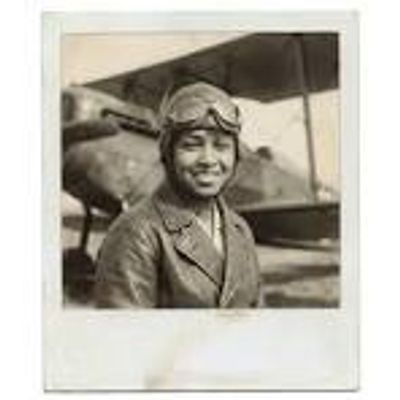
Bessie Coleman portrait - vinatage - Polaroid - with flight gear
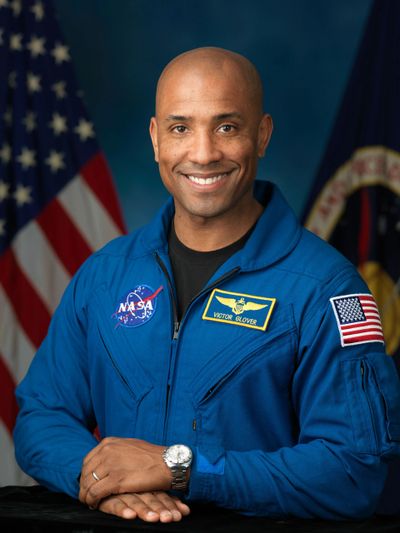
Celebrating NASA Astronaut and US Navy Captain Victor Glover
NASA Astronaut and U.S. Navy Captain
Born in Pomona, California. Married to the
former Dionna Odom of Berkeley,
California. They have four children.
Astronaut Victor Glover is the latest in a long
line of Black American explorers −
including York, the enslaved man who
played a key role in the Lewis and Clark
expedition
Education
Graduated from Ontario High School, Ontario, California, 1994.
Bachelor of Science in General Engineering, California Polytechnic State
University, San Luis Obispo, California, 1999.
Master of Science in Flight Test Engineering (USAF TPS), Air
University, Edwards Air Force Base, California, 2007.
Master of Science in Systems Engineering (PD‐21), Naval Postgraduate
School, 2009.
Master of Military Operational Art and Science, Air University,
Montgomery, Alabama, 2010.
Experience
Victor J. Glover, Jr. was selected as an astronaut in 2013 while serving as
a Legislative Fellow in the United States Senate.
He most recently served as pilot of the Crew-1 dragon spacecraft, named
Resilience, which flew to the International Space Station, where he also
served as Flight Engineer for Expedition 64/65.
Glover has been assigned as Pilot of NASA’s Artemis II mission around
the Moon.
Victor Glover, Christina Koch, and CSA (Canadian Space Agency)
astronaut Jeremy Hansen aboard the Orion spacecraft on an
approximately 10-day test flight around the Moon and back.
The California native earned an undergraduate engineering degree as a
two sport athlete, while serving his community. Glover is a Naval Aviator
and was a test pilot in the F/A‐18 Hornet, Super Hornet and EA‐18G
Growler. He and his family have been stationed in many locations in the
United States and Japan and he has deployed in combat and peacetime.
Education : Graduated from Ontario High School, Ontario, California,
1994. General Engineering, Flight Test Engineering (USAF TPS), Air
University, Edwards Air Force Base, Systems Engineering (PD‐21),
Naval Postgraduate School, 2009. Military Operational Art and Science.
Experience: Glover accumulated 3,500 flight hours in more than 40
aircraft, over 400 carrier arrested landings and 24 combat missions.
After completing Astronaut Candidate Training in 2015, he served as a
space station capsule communicator, Expedition 52 Increment Lead
Crewmember, Operations Officer, and Family Escort for several Soyuz
and Crew Dragon launches – one of the most challenging and rewarding
jobs of an astronaut.
Awards/Honors
The Defense Superior Service Medal, Navy Commendation Medal, two
Navy and Marine Corps Achievement Medals, NASA Distinguished
Service Medal, and NASA Space Exploration Meda.
Ontario High School 1994 athlete of the year.
Cal Poly, San Luis Obispo, Service to the Community Award and
community service notation on transcripts.
Distinguished Graduate and Regimental Commander, U.S. Navy Officer
Candidate School; Onizuka Prop Wash Award.
United States Air Force Test Pilot School.
Distinguished Graduate, Air Command and Staff College.
Named one of Jet Magazine’s inaugural 40 under 40 in 2013.
2023 ASE Congress Perchatka. Member of 2023 TIME 100 Next.